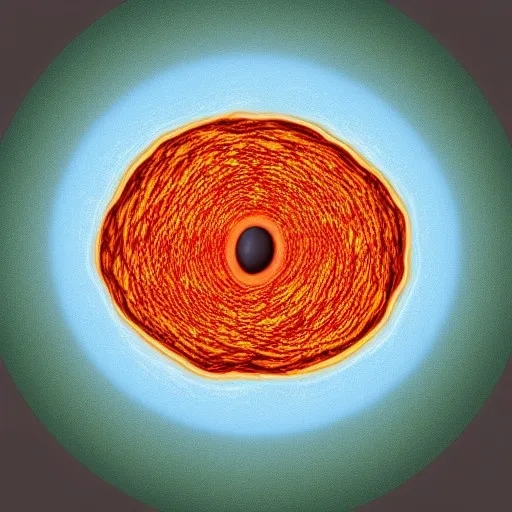
All the world data in four ping pong balls

in the DNA Double Helix. Image generated by Nightcafe.
The incredible possibilities with DNA storage
Oh Gosh! We humans, what have we been doing in the last 30 years?
We’ve been generating a lot of carbon dioxide and warming up the atmosphere. We have been using planet-deforming loads of plastics and polluting our oceans and our lands.
And then we’ve also been generating lots and lots and lots of data.
Digital cameras, video cameras, video phones, IOT, connected cars and such technologies now generate data by the GB. The world got progressively digitized by Google, Facebook, and others. That required more storage.
Quickly, by 2020 we had about 400 Zettabytes of data. That was the size of all the data in all the digital storage in the world.
So that 1TB hard disk of yours? By 2020, we needed 400 Billion of them to hold all the data in the world.
Move over to 2025:
400 Zettabytes until 2020? By 2025, we will be generating 400 Zettabytes, every 100 days. Now think of storage. All this is stored in storage disks in data centers and on your PCs and Phones.
These hard disks get refreshed once every 10 years. So, if we have information of say 2000 Zetta bytes, the entire data store is going to get refreshed every 10 years or so. This is because of changes in USB ports or connectivity or storage standards or electricity standards or whatnot. More waste, more pollution.
So, storage is a great business for the future. All storage manufacturers including companies like Western Digital, and Samsung will be looking at how they are going to solve this problem for 2025 and beyond.
So, we will end up generating nearly 4 times more data in 2025, than all the data we had from beginning of time until 2020.
Fast forward to 2035:
Think of the possibilities by 2035. Right.
We might have some 8G Connectivity, with 1TBPS connectivity available where ever you are. Our phones of the future might be as powerful as the supercomputers of today. So, what are the services that are possible?
Just think. Just imagine.
ExpAnyTime: Timeshift sensory perception:
In 2035, you might have a service like ExpAnyTime. Experience Any Time.
Have six-sensory experience of any event, any place any time.
Imagine you missed that favorite concert. Can you experience it right from home, anytime later? From any vantage of the concert?

Generated by NightCafe.
Smelling the smells, getting the balance of acoustics, getting jammed by people, sweat, grime, noise, and all that experience? Can you feel the exhilaration from any vantage?
Can you buy a ticket for any concert or event of the past and enjoy all six sensory perceptions? For that, the organizers record all six perceptions from every vantage, 360 degrees. Petabytes of data will be required for every vantage.
They will then stream the data to your ExpAnyTime Suite to make you experience the concert.
Right on your suite. Generated by NightCafe.
How much storage is required for ExpAnyTime? This is just an example of services that could voraciously need storage.
Nature is a light year ahead
Yeah this is all scientific progress is great, but nature is miles ahead. Light years ahead.
Now just think about how you and I and pretty much everybody else came to be here. The father’s sperm, one single sperm, just 5-micron size, hits the mother’s egg, 100-micron size. They merge together and form a single cell that has 46 chromosomes.

The sperm and the egg had all the information required to build a full-fledged human being. You.
Remember, it didn’t mess up the instructions in the storage and make you into an ant or a hummingbird. 100% of the time, humans beget humans.
The single cell had all the instructions to replicate into a set of cells. Some go off and grow into the left leg. Others develop as muscles and become the heart. Some of those cells develop as neurons and become the brain. All from a single cell.
Besides, they also carry the characteristics of the father and mother. Father is tall, the mother has green eyes, and both are prone to diabetics. The offspring gets some variation of all these.
The genetic code gets passed on. All through that 100-micron egg and 5-micron sperm.
The 5-micron sperm, with a few nanograms of DNA, has almost 40MB of data. Imagine 1 gram of DNA. If you extrapolate, it can contain over 215 petabytes of data.
That is 215000 TB then. We talked about 1600 Zettabytes of information getting generated by 2025… all that can be stored, happily in 4 ping pong ball-sized DNA storage system.
So, that might be the future.
How DNA Stores information:
How does the entire information about the parents get transmitted to the cell that grows into a baby? How come there are no errors in the transmission?
Now you know that information in a computer is stored in Base 2. In Zeros and Ones. Like 0,1,0,1,0,0,0,1,1. That is why it is ‘digital’.
The DNA as you know is a double helix. Now, DNA didn’t follow Base 2, it went for Base 4. The information about the mother and father is stored as proteins that connect the strands of the helix together. There are four types of such proteins – the A, T, E, G type proteins. The generic information is communicated through this code in the DNA.
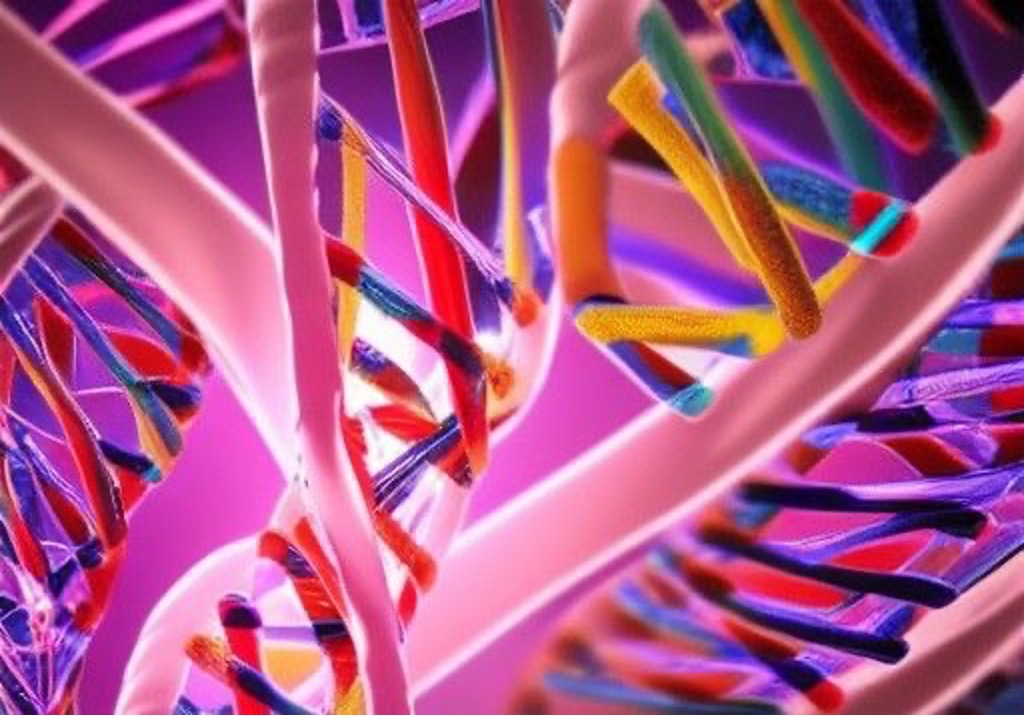
Now suppose, we can read this DNA code. Yes, we can. Technologies have been available since the 1970s to read and sequence the DNA – read the genetic code consisting of A, T, E G proteins. The process is slow, but it is possible.
So, if we are somehow able to write an image in DNA code, then we can read that, convert it to JPG and watch it on our computer. How about writing that movie in the DNA? Can we write the code and program the DNA, like we copy the file into the Hard Disk?
So, can we write into the DNA? Yes, now it is possible to synthesize the DNA using the core proteins. We can thus write a sequence of code in the double helix.
So, instead of a code like 01000011110, we can have a code like ATEEEGGGEGTAAA….
The process of writing the code is spectacularly slow. It involves forming the bridging A, T, E, G proteins between the DNA strand, as a sequence, one protein at a time.
It takes months to do DNA synthesis for even a few MB of data. But in fact, we can covert books, movies, AR experiences, and any other files into Base 4 and write it into the DNA. It is currently possible and is being done in the labs.
You know one gram of DNA can store 215000 TB of Data. You can imagine the mind-boggling storage possibilities.
And this storage is longterm and near permanent.
Svante Pääbo got the Nobel prize in 2022 for reading the DNA of a Neanderthal. And Neanderthals died 40000 years ago, the code was written then. So, the DNA storage is pretty much a permanent log of the information. It doesn’t need the power to retain the information.

Image generated by NightCafe.
Code Breakers in action:
DNA research is accelerating at a scorching pace. The book Code Breaker by Walter Isaacson offers some fascinating glimpses of progress. Writing, Storage, and Transportation of DNA storage are all being worked on.
Organizations like Los Alamos National Laboratory are developing standards like DNA Storage Codex (ADS Codex). The Molecular Information Storage program (MIST), seeks to bring cheaper, bigger, longer lasting, and low-power storage to the world.
Like the Internet came out of DARPA, MIST is getting developed in IARPA (Intelligence Advance Research Project Activity).
I’m sure leaders in storage space like Western Digital will be looking at this space with a lot of interest. They will be talking to research labs and biotechnologists. Maybe they are even running some experiments. With DNA storage, they can create disruption and set themselves for success well into the 2050s. Of course, they need a different (corporate) DNA for it, one that involves DNA and not semiconductors :).
In a decade or so, if DNA storage comes to fruition, we might truly carry the world in our pockets. We can write all the data generated in 2025, all 1600 Zettabytes of them in DNA storage in the size of four ping pong balls. And carry them around, offline.
400 Zettabytes per ping pong ball of DNA storage, give or take.

DNA can prove to be the ultimate data storage solution, ushering us into a new world of possibilities.
 Future starts mid-week
Quite a complex topic and explained with a lot of simplicity. 4 ping pong balls truly very powerful. DNA storage would indeed have pivotal potentials in the future!